You're Shopping in the Wrong Place: The Hidden Storefronts Living Inside Private Discord Servers
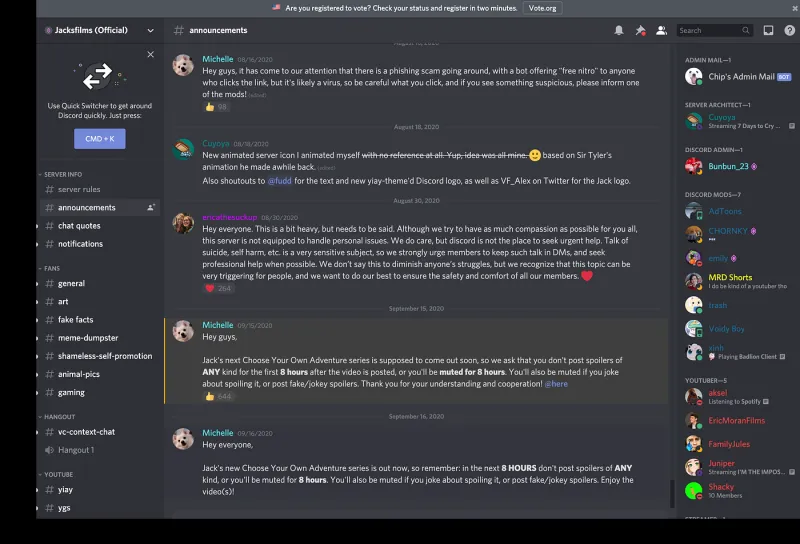
Photo: Discord community online chat niche brand digital marketplace, via miro.medium.com
If you've been refreshing a brand's website waiting for a drop that never seems to go live for you, there's a decent chance the sale already happened — just not anywhere you were looking. Welcome to the era of the invisible storefront.
Across the US, a growing number of independent brands, underground designers, and niche product makers have quietly relocated their primary sales activity off traditional e-commerce platforms and into private online communities. Discord servers, gated Slack channels, Telegram groups, and membership-only forums have become the actual shopping destinations for some of the most sought-after products in streetwear, art, specialty food, handmade goods, and beyond.
This isn't a fringe experiment anymore. It's a full-on structural shift in how niche commerce operates — and if you don't know about it, you're effectively locked out of an entire economy.
Why Brands Are Ditching the Storefront
To understand why this is happening, you have to think about the problem brands are actually trying to solve.
For small, community-oriented labels, a public Shopify drop is kind of a nightmare. Bots sweep inventory in seconds. Resellers flip product before real fans can even check out. The brand's actual community — the people who've been there since the beginning — gets crowded out by opportunists who have zero emotional connection to what the brand is doing.
A private Discord server fixes most of that. Access is controlled. The brand knows who's in the room. Early drops, exclusive colorways, and limited runs can go to verified community members before anyone else even knows they exist. The whole chaotic, impersonal energy of a public drop gets replaced by something that feels a lot more like shopping with friends.
Jordan Reyes runs a small-batch ceramics brand out of Portland that moved nearly all of its sales activity into a Discord server about two years ago. "We were losing our minds trying to manage public drops," she explains. "Now I post a photo in the server, people respond, and we figure it out. It's slower, but the people buying actually want the work. That matters to me."
What Actually Happens Inside These Servers
If you've never been inside a brand-run Discord, the mechanics might surprise you.
Most of them have tiered access. You join at a basic level and can see general community content — brand news, behind-the-scenes posts, maybe a public chat channel. But to get into the channels where actual drops happen, you typically need to level up. That might mean engaging consistently in the community, spending above a certain threshold in previous drops, getting vouched by an existing member, or paying for a membership tier.
Once you're in the inner channels, the experience is radically different from traditional e-commerce. Drops are often announced with short windows — sometimes just hours. Products are frequently one-of-a-kind or made-to-order. Payment happens through direct invoice, PayPal, or increasingly through crypto. The whole transaction feels less like clicking "add to cart" and more like a conversation.
Some servers have become genuine cultural hubs. There are channels for discussing the brand's aesthetic influences, channels where members share how they're styling or using products, and channels where the founder or designer just... hangs out and talks to people. The commerce is embedded in a community, not the other way around.
The Discovery Problem Nobody Talks About
Here's the tension at the center of all this, and it's worth naming directly: a system built on exclusivity is also a system built on gatekeeping.
The same mechanisms that protect a community from bots and resellers also make it genuinely hard for new people to find and enter. There's no algorithm serving you a recommendation for a Discord server the way Instagram might surface a new brand. Discovery is almost entirely social — you hear about it from a friend, see someone reference it in a niche forum, or stumble across a cryptic mention on Reddit.
For people who are already embedded in specific subcultures, this is no big deal. The network is already there. But for someone on the outside trying to find their community? The barrier can feel pretty high.
The brands navigating this most successfully tend to maintain a small public presence — usually an Instagram account or a minimal website — that functions as a breadcrumb trail. It's enough to signal that the brand exists and has a vibe, but the actual depth of the relationship lives behind the server door.
How to Actually Navigate This Landscape
If you want to shop in these spaces — and increasingly, the most interesting products are only available here — there are a few practical moves that actually work.
Start with communities, not brands. Subreddits, niche Facebook groups, and topic-specific Discord servers that aren't brand-run are often where people share invites and talk about what they're buying. Spend time in those spaces and you'll naturally encounter references to the brand communities worth joining.
Be a real participant before you try to buy anything. Nothing kills your credibility in a tight community faster than showing up, immediately asking where the drops are, and disappearing. Engage genuinely. Ask questions. Contribute to conversations. The access comes after the relationship.
Follow the creators, not just the brands. Many of the designers and makers running these operations are active on social media as individuals. Following them personally often gets you closer to drop announcements and server invites than following the brand account does.
Accept that some doors won't open for you — and that's okay. Part of what makes these communities valuable is that they're selective. If a server has a waitlist or a vetting process, respect it. Trying to circumvent the system will get you blacklisted fast, and niche communities talk to each other.
What This Means for the Future of Shopping
The Discord economy is still young, and it has real friction. Payment processes can be clunky. Customer service is informal. Returns and disputes don't have the infrastructure of a proper e-commerce platform behind them. These are legitimate downsides.
But the tradeoff — a direct relationship with a brand you actually care about, access to products that feel genuinely exclusive, and a community of people who share your taste — is compelling enough that more and more shoppers are willing to deal with the rougher edges.
At Lezul Shop, this is the kind of shopping culture we find genuinely exciting: commerce that's built around real communities, real aesthetics, and real relationships between makers and buyers. The hidden storefronts are messy and imperfect, but they're also some of the most alive spaces in retail right now. Sometimes the best stuff really is behind the velvet rope — you just have to find the right door.